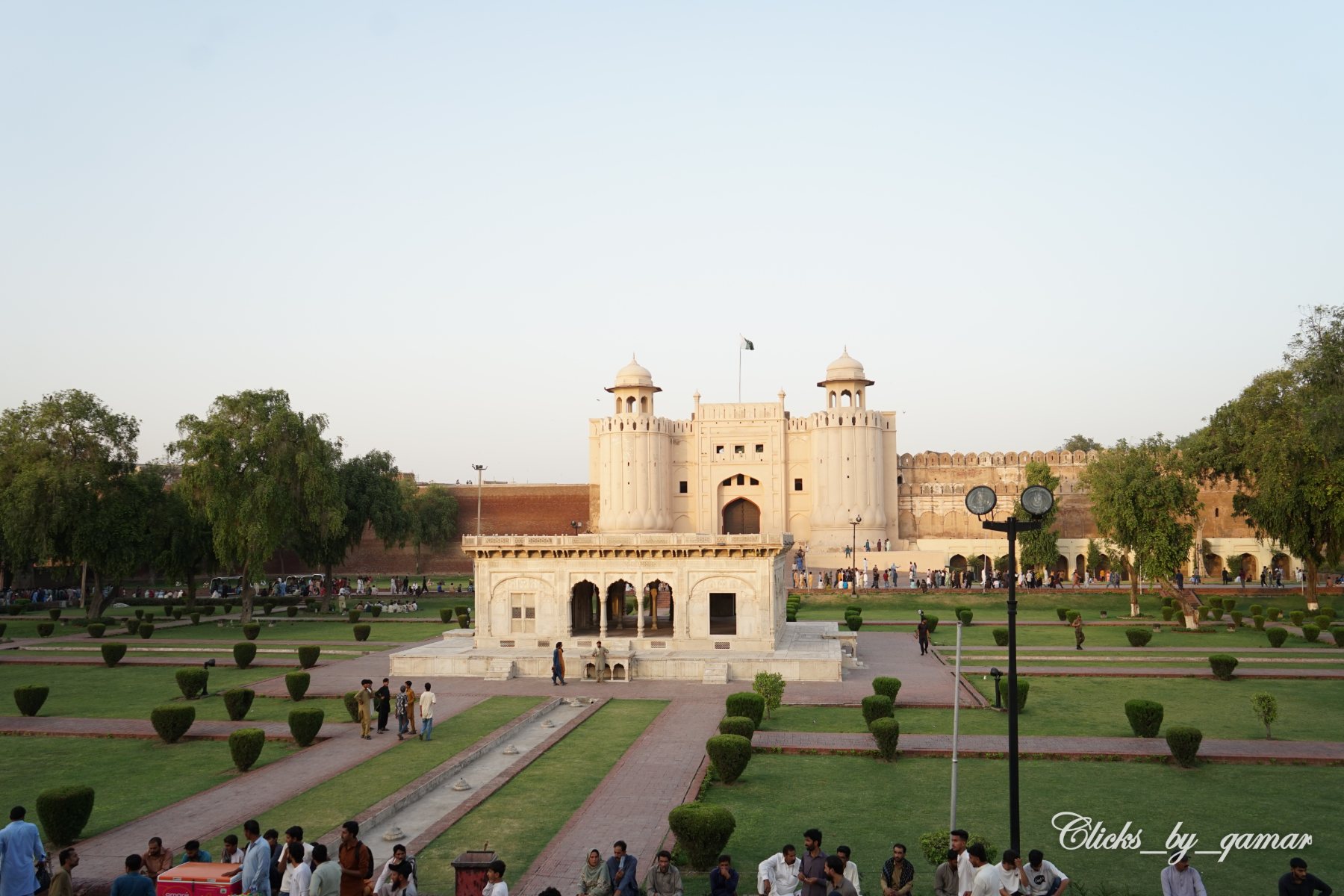
Some cities stay with you not only because of what you see there, but because of what they remind you of elsewhere. That was my feeling when I visited Delhi and Lahore. Walking through the old Mughal spaces of both cities, I often felt I was not moving between two separate places, but through two chapters of the same story. The names were different, the flags were different, and the streets had their own rhythm, yet the stones, arches, domes and gateways seemed to recognise one another.
In Delhi, standing before the Jama Masjid and later walking around the Red Fort, I was struck by the scale and confidence of Mughal architecture. The red sandstone glowed in the changing light, and the white marble details softened the grandeur with elegance. Then, in Lahore, I found myself carrying those same images into the courtyards of the Badshahi Masjid and the walls of the Lahore Fort. The resemblance was immediate and emotional. It was as if Delhi had left an architectural memory behind, and Lahore had preserved it in its own language.
The mosques, especially, felt like close relatives. Jama Masjid in Delhi, built by Shah Jahan, and Badshahi Masjid in Lahore, commissioned later by Aurangzeb, share the same Mughal vision — vast courtyards, red sandstone, marble inlay, balanced domes, and a sense of dignity that goes beyond religion and enters the realm of beauty. Of course, there are differences. Badshahi Masjid is much larger and more imposing, while Jama Masjid sits within the dense life of Old Delhi, surrounded by noise, markets, and movement. But standing in both places, I could feel the same architectural heartbeat. The forts gave me the same feeling. Lahore Fort and Delhi’s Red Fort are not exact copies, but they speak to each other across history. Both were seats of Mughal power, both built in red sandstone, both designed as spaces of authority, ceremony, and residence. Their gates, walls, and courtyards carry the same imperial confidence. As I walked through them, I was reminded how deeply the histories of these two cities are intertwined.
What stayed with me most was not simply the beauty of the buildings, but the strange comfort of familiarity. In a region divided by borders and politics, Delhi and Lahore still mirror one another in stone. Visiting both cities felt like discovering that history has a memory longer than conflict. Their mosques and forts do not just tell the story of emperors — they quietly remind us that culture, art, and human imagination once moved freely across the land we now call separate countries. For me, Delhi and Lahore were not two destinations. They were two reflections of one shared past.