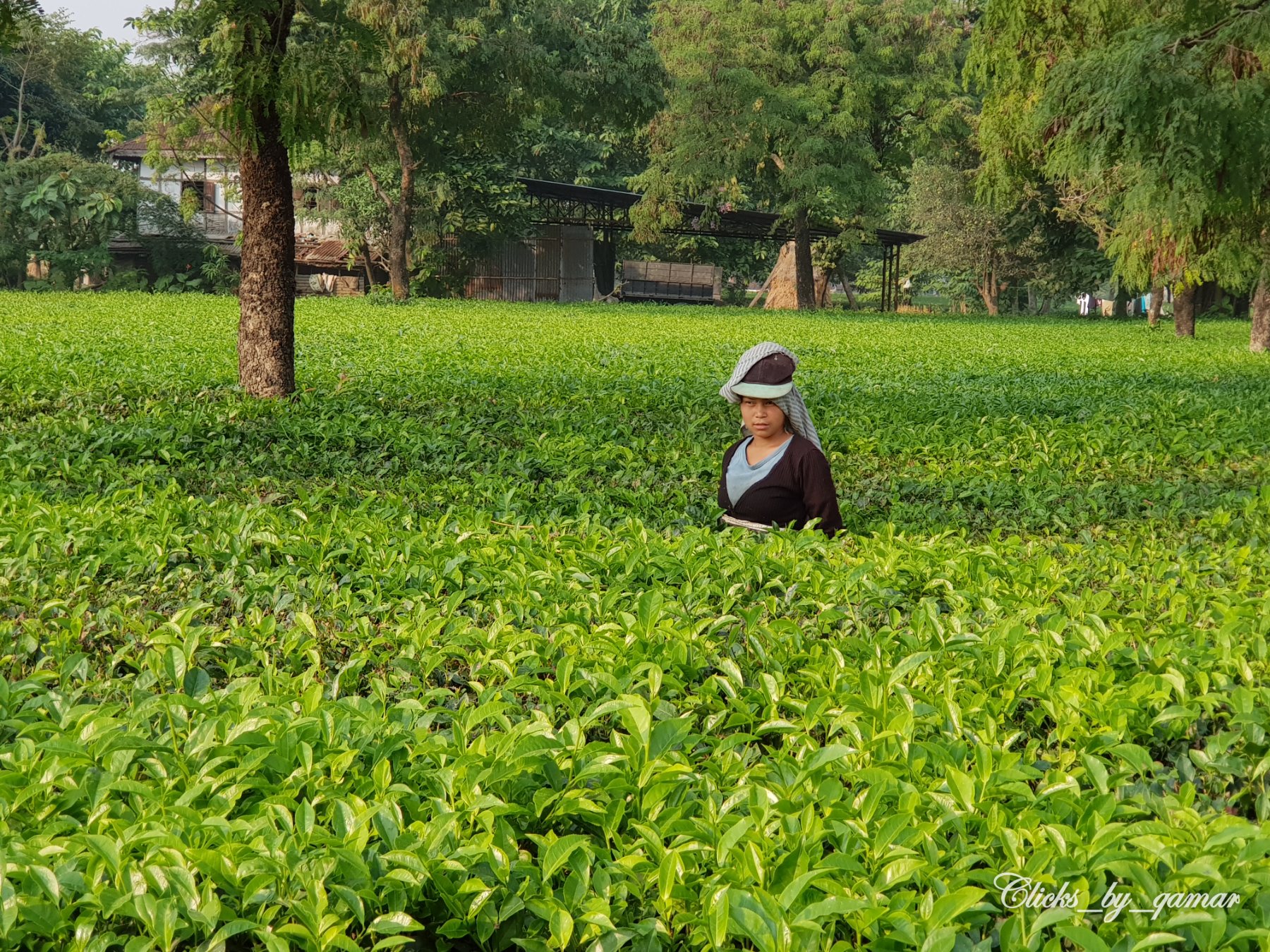
For years, I had heard captivating stories about the stunning beauty of tea gardens across South Asia, from the vast plantations in India and Sri Lanka to the historic estates in Bangladesh. As someone who deeply appreciates nature and landscape photography, the idea of capturing these lush, green expanses had always intrigued me. Yet, despite my travels, I had never personally set foot in a tea garden—until my trip to Nepal in 2017. My destination was the easternmost district of Nepal, Jhapa, nestled in the fertile Terai plains. Unlike the high-altitude, terraced estates found elsewhere in the country, Jhapa’s tea gardens offer a distinct, serene landscape set within a lush, subtropical climate. The scenery is breathtakingly vibrant, often framed by towering palm trees, banana groves, and traditional rice paddies, which create a rich, green tapestry unlike any other. The journey itself was a memorable start; I took a 45-minute flight from Tribhuvan International Airport in Kathmandu to Bhadrapur Airport, which provided a unique perspective of the landscape below.
Once we landed, our friends had a vehicle arranged to take us directly to the plantation. Stepping into that vast, verdant world for the first time was a sight to behold. It happened to be the picking season, and the fields were alive with activity. Men and women were working diligently among the tea bushes, their movements rhythmic and precise. I quickly realized that picking tea leaves is truly an art form, and these workers were absolute experts at their craft. The lush, verdant tea gardens of Jhapa create an enchanting, tranquil atmosphere that captivates first-time visitors, offering a serene, immersive escape within the vibrant, green landscape of the Terai plains. What struck me most, however, was not just the landscape’s aesthetic appeal, but the people who inhabit it. Despite facing significant economic challenges, the workers greeted us with warm, smiling faces. They were incredibly polite, friendly, and eager to explain their daily work to us. I found the workers, especially the women, to be remarkably open-hearted and hospitable. Walking through those expansive plantations, which are often interspersed with small, typical villages, provided a peaceful and immersive look at rural Nepalese life. It was a privilege to witness the daily lives of the local communities and farmers who have been tending to these fields for generations. I left the gardens feeling deeply inspired. Even with their low-income structures, these people possessed a genuine, infectious happiness. It was a joy to see them gather together, share moments of fun, sing songs, and dance amidst their hard work. Witnessing their resilience and communal joy was, perhaps, the most beautiful part of my visit to Jhapa. It was an experience that reminded me that the true beauty of a landscape is often defined by the spirit of the people who call it home.