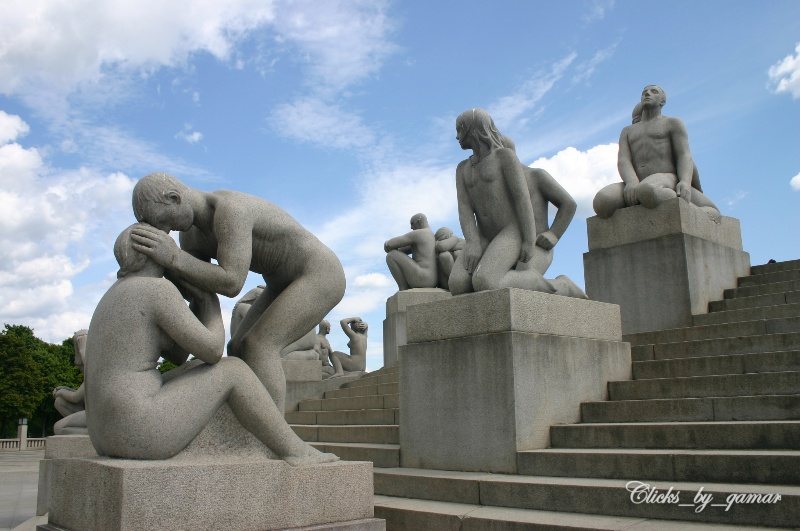
It was in 2008 that I visited Oslo for the first time. Among the city's many attractions, one place left an unforgettable impression on me—Vigeland Park. A friend suggested we spend an afternoon there, and from the moment I walked through its gates, I realized I was entering far more than an ordinary sculpture park. Situated within the beautiful Frogner Park, Vigeland Park is the world's largest sculpture park created by a single artist. Norwegian sculptor Gustav Vigeland devoted more than four decades of his life to this remarkable masterpiece, producing 212 sculptures featuring over 650 human figures cast in bronze, carved in granite, and forged in wrought iron.
What fascinated me most was not simply the artistic excellence, but the emotions captured in every sculpture. Each figure tells a story, portraying the universal journey of humanity—from birth and childhood to friendship, love, family, struggle, aging, and ultimately death. The expressions, gestures, and body language are so lifelike that the sculptures seem almost capable of speaking.
Among the park's most celebrated works is The Angry Boy (Sinnataggen), a small bronze figure whose clenched fists, furrowed face, and stamping foot perfectly capture a child's frustration. Despite its modest size, it has become one of Norway's most iconic sculptures. Unlike monuments dedicated to kings, generals, or political leaders, Vigeland's creations celebrate ordinary people and the emotions that unite us all. Walking through the park felt like reading a visual story of life itself—one that transcends language, culture and time. It remains one of the most inspiring artistic experiences I have ever had.